Moshi: North Pune's Next Growth Corridor — A Developer's View
Why infrastructure, institutions, employment and changing buyer behaviour could make Moshi one of North Pune's most important real estate markets — and what developers need to do differently.
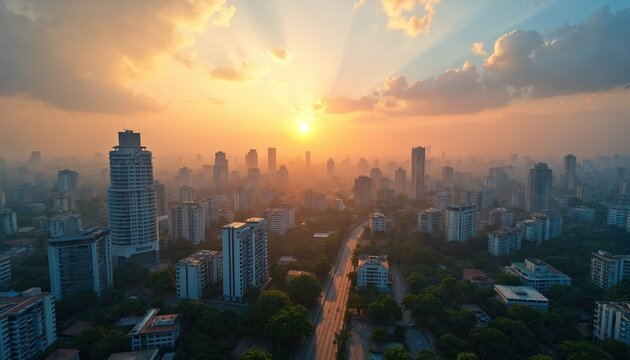
North Pune's Urban Transformation
For years, Moshi was largely discussed in one context: affordable housing in North Pune. That description is increasingly incomplete.
The Moshi of 2026 is beginning to look very different from the Moshi of a decade ago. A proposed 70-acre Pune campus for IIM Nagpur, a major government hospital and medical education ecosystem, a judicial complex, the Pune International Exhibition and Convention Centre, regional connectivity investments and a proposed international golf club are collectively changing the profile of the locality.
Individually, each development is interesting. Together, they tell a more important story: Moshi is gradually developing the characteristics of an urban node rather than simply functioning as a residential extension of Pune.
Founder's view
“Real estate markets don't change overnight. They compound. A road gets built, businesses arrive, employees move closer, institutions follow, and eventually a location crosses an invisible line — it stops being perceived as far away and becomes part of the city.”
— Swapnil Sawant, Founder, 12x Realty
The question we should be asking about Moshi
Whenever a new infrastructure project is announced, the real estate industry tends to react predictably. Property portals publish articles, developers update brochures and a location is declared the “next big thing.” We think that is the wrong way to analyse a market.
The more important question is:
What kind of economic and human activity will this infrastructure create around itself?
A road can improve accessibility. A hospital can create employment and daily footfall. An educational institution can attract students, faculty and professionals. An exhibition centre can bring businesses and visitors. A court complex can create an institutional ecosystem. A recreational destination can change the lifestyle profile of a neighbourhood.
When several of these things begin appearing within the same broader geography, the impact can be much greater than the sum of individual projects. That is what makes Moshi interesting to us.
1. IIM Nagpur changes the nature of the Moshi story
One of the strongest recent developments is the proposed Pune campus of IIM Nagpur. In July 2026, the Government of Maharashtra allotted approximately 70 acres at Moshi to IIM Nagpur for a full-fledged academic and residential campus. The institute has described the Pune campus as part of its Strategic Roadmap 2026–31.
For real estate, the significance is not simply the number of acres. It is the quality of the institution.
A nationally recognised management institute can create a very different ecosystem from a conventional residential or commercial development:
- Students and faculty
- Visiting professors and executive education participants
- Corporate professionals and consultants
- Academic and business events
- Rental accommodation and hospitality demand
- Supporting food, retail and service businesses
In our view, the most important shift is that Moshi is not simply attracting more residents. It is potentially attracting different kinds of residents, professionals and visitors.
Source: Press Information Bureau — IIM Nagpur's 70-acre Pune campus.
2. Healthcare could become another major employment and social anchor
Healthcare is another important pillar. PCMC has pursued a major 850-bed multispeciality hospital in Moshi, with plans that have also included medical and nursing education facilities. PCMC's 2024–25 budget described the hospital as a response to population growth and pressure on existing civic healthcare infrastructure.
For a residential market, large healthcare infrastructure has two effects. The first is obvious: better access to healthcare. The second is less obvious but equally important: economic activity.
Large healthcare institutions require doctors, nurses, technicians, administrative staff, support services, pharmacies, food services, accommodation and other businesses. For families evaluating a home over the next 10–15 years, healthcare is also a major part of what we call neighbourhood completeness.
Sources: The Indian Express — PCMC Budget 2024–25 and Hindustan Times — Medical and nursing college plans.
3. The proposed golf club is interesting — but developers should be careful
The most recent development to attract attention is PCMC's proposal for an international-standard golf club in Moshi. The proposal covers approximately 61.38 hectares and involves changing multiple existing land reservations to create a golf-course and club reservation.
This is potentially significant, but it is also where real estate marketing needs to remain disciplined.
The golf club is a proposal. It is not an operational facility today. The proposal has to pass the applicable statutory process and government approvals. We would therefore not advise a developer to sell a home today by claiming that Moshi “has an international golf course.”
The better interpretation is that the proposal is an indicator of how civic authorities are thinking about Moshi's future urban role. If eventually implemented, a destination of this scale could influence the lifestyle positioning of surrounding residential and commercial developments.
Source: Pudhari — 61.38-hectare Moshi golf club proposal.
4. Moshi is developing institutional depth
Another development that deserves attention is the proposed judicial complex at Moshi. Maharashtra's Public Works Department currently lists the project, with the latest notice describing a Lower Ground + Ground + 5-floor complex replacing the earlier 26-court proposal.
Again, the important point isn't simply the number of courts. It is what institutional infrastructure does to an area. Courts bring lawyers, government employees, administrative staff, visitors, professional services and supporting retail and food businesses.
When educational, healthcare and judicial institutions begin developing in the same geography, the locality starts acquiring a more diverse economic base. That is one of the characteristics we look for when evaluating an emerging real estate corridor.
Source: Maharashtra Public Works Department — Judicial Complex at Moshi.
5. PIECC gives Moshi something most residential corridors don't have
Moshi also benefits from the Pune International Exhibition and Convention Centre (PIECC). PMRDA says the centre's overall land area is approximately 94.87 hectares, with an operational open exhibition centre and a larger planned ecosystem including exhibition halls, a 5,000-seat convention centre, business facilities, hotels, parking and other allied uses.
This creates a different type of demand. Exhibitors, visitors, corporate teams, suppliers, hospitality providers and transport operators create recurring economic activity. It may not translate directly into apartment sales, but it contributes to the economic depth of the location.
PMRDA has also pursued development of PIECC through a public-private partnership route, reinforcing the long-term importance of the facility within the region.
Sources: PMRDA — PIECC and PMRDA — PIECC PPP development.
6. The industrial belt is the demand engine underneath the story
Infrastructure announcements are exciting. But infrastructure alone doesn't create sustainable housing demand. Employment does.
This is where Moshi's geography becomes particularly relevant. The wider North Pune region connects Moshi with established employment centres across Bhosari, Pimpri-Chinchwad, Chakan and Talegaon, alongside technology and services activity elsewhere in the northern Pune region.
The advantage is diversification. Moshi does not need to wait for one giant employer to arrive. The surrounding employment ecosystem already exists. Moshi therefore sits between established employment centres and emerging institutional infrastructure, giving residential developers access to multiple buyer segments rather than a single employment catchment.
7. Connectivity will determine how much of this potential becomes reality
There is one factor that can make or break any peripheral real estate market: connectivity.
Moshi benefits from the Pune–Nashik Highway and connections towards Bhosari, Chakan, Alandi and other parts of North Pune. At the regional level, PMRDA's proposed 83.12-km Pune Inner Ring Road is designed to improve connections between major transport, IT and industrial hubs including Lohegaon Airport, Hinjewadi IT Park and Chakan MIDC.
But again, developers should be careful. A proposed road is not the same as a completed road. A planned transport link is not the same as today's commuting convenience. Future infrastructure should therefore be treated as a catalyst with a timeline, not as an immediate benefit.
Source: PMRDA — Pune Inner Ring Road.
So what is actually happening to Moshi?
If we strip away the headlines, the transformation becomes easier to understand.
| Earlier Moshi | Emerging Moshi |
|---|---|
| Affordable housing | Housing + institutions + services |
| Highway connectivity | Regional connectivity agenda |
| Industrial employment nearby | Industrial + education + healthcare + business ecosystem |
| Residential growth | Residential + commercial + lifestyle potential |
That is a meaningful evolution. And it changes the way developers should think about the market.
The real estate opportunity isn't simply “buy in Moshi”
This is where our perspective as a real estate mandate company in Pune becomes important.
A growing market does not automatically mean every project in that market will succeed. In fact, growth can make the developer's job harder because competition follows opportunity.
As more developers enter Moshi, buyers get more choices. The question shifts from “Is Moshi growing?” to:
Why should a buyer choose my project over the other projects entering Moshi?
That cannot be solved by putting another billboard on the highway.
The next phase of Moshi will be won through positioning
We believe Pune's real estate market is moving into a phase where developers need to think beyond construction. A successful project requires alignment between:
Market → Product → Pricing → Positioning → Marketing → Sales
If one of these is significantly wrong, the developer ends up compensating through discounts, higher marketing expenditure or longer inventory cycles.
- A good location can still be incorrectly priced.
- An excellent product can communicate the wrong proposition.
- A campaign can generate thousands of leads but attract the wrong audience.
- A sales team can receive leads but fail to follow up systematically.
- A developer can have strong channel relationships but weak digital demand generation.
These aren't independent problems. They are one sales funnel.
Why we believe the mandate model is becoming more relevant
Traditionally, developers have worked with multiple specialists: an agency for branding, a digital agency for leads, brokers for sales, telecallers for qualification, an in-house team for site visits and separate consultants for research.
The problem is that every function can optimise its own metric while nobody owns the final outcome.
The branding agency wants good creative. The performance agency wants low CPL. The broker wants inventory and commission. The sales team wants qualified site visits.
But the developer ultimately wants one thing:
Bookings.
A real estate mandate model attempts to solve that fragmentation by putting the commercial outcome at the centre.
What a modern real estate mandate should actually do
At 12x Realty, we see a real estate mandate as much more than outsourced sales. A developer should be able to work with a mandate partner across the entire demand-to-booking journey.
Micro-market, competition, inventory, pricing and buyer segments.
Who the project is for and why that buyer should choose it.
Brand, content, performance and demand-generation strategy.
Separating buying intent from raw enquiry volume.
Site visits, follow-up, negotiation and conversion.
Understanding where prospects drop and fixing the weakest point.
This is what we believe a real estate mandate company in Pune should ultimately be responsible for. Not just generating leads. Not just selling apartments. Owning the growth engine.
A founder's view: Why we believe Moshi matters
At 12x Realty, we spend a significant amount of time looking at Pune from the developer's side of the table. One lesson becomes clear very quickly:
Real estate markets don't change overnight. They compound.
A road gets built. Then businesses arrive. Then employees move closer. Then schools and hospitals follow. Then retail appears. Then developers begin upgrading the product. Then buyers who previously wouldn't consider the location start considering it.
At some point, the market crosses an invisible line. It stops being perceived as “far away” and becomes simply another established part of the city.
We believe Moshi is moving towards that transition.
But we also believe the next five years will not reward every developer equally. Developers who understand the market early, choose the right product, price it correctly and build a strong sales engine will have a significant advantage.
That is the opportunity we see — not just in selling more homes in Moshi, but in helping developers build the right businesses around a changing market.
Moshi's future should be evaluated on evidence, not hype
There is a temptation in real estate to take every infrastructure announcement and convert it into a price appreciation story. We don't subscribe to that approach.
The IIM campus is a meaningful institutional development. The hospital represents healthcare infrastructure. The judicial complex adds civic depth. PIECC adds business and exhibition activity. The industrial belt provides employment. The proposed golf club represents potential lifestyle upside. Regional connectivity can strengthen the wider ecosystem.
But each has a different implementation timeline. Some are operational. Some are under development. Some are approved. Some remain proposals.
That nuance is important. A credible real estate ecosystem should be built on facts, not promises.
Our view on Moshi
We don't see Moshi simply as another locality where residential inventory is increasing. We see it as a developing urban node within the larger North Pune growth ecosystem.
That distinction matters because when a locality develops multiple independent demand drivers, the opportunity for developers becomes significantly larger. But so does the competition.
The market will increasingly reward developers who can answer three questions better than their competitors:
- Who exactly are we building for?
- Why should they choose our project?
- How efficiently can we convert that demand into bookings?
The infrastructure is creating the opportunity. Execution will determine who captures it.
12x Realty — Building the Growth Engine for Real Estate Developers
12x Realty is a Pune-based real estate mandate company working with developers across market research, project positioning, marketing, lead generation and sales execution.
Our philosophy is simple:
Our Goal. Your Growth.
We believe the next generation of real estate sales companies will not operate as traditional brokers or standalone marketing agencies. They will operate as integrated growth partners for developers — combining human sales execution with technology, data and AI-driven systems.
For developers evaluating a project in Moshi, North Pune or other emerging Pune micro-markets, the conversation should begin before the campaign begins.
It should begin with the market.
What is the opportunity? Who is the buyer? What should the product stand for? What should it cost? Where will demand come from? And what sales engine will convert that demand into revenue?
Because in the end, a real estate project doesn't succeed because a market is growing.
It succeeds because the developer captures the growth better than the competition.
Explore related 12x Realty insights
- Residential Sales Mandate in Pune
- Market Research & Project Positioning
- Real Estate Lead Generation for Developers
- Pune Real Estate Hotspots 2026
- Complete Guide to Real Estate Mandate Models
Planning your next real estate project in Pune?
Talk to 12x Realty about a market-led sales and marketing mandate. We evaluate the micro-market, product, positioning and existing sales setup before recommending the right growth strategy.
Request a Mandate ProposalInfrastructure developments referenced in this article are at different stages of planning and execution. Announced, approved, under-construction and proposed projects should not be treated as equivalent. In particular, the proposed golf-club development remains subject to the applicable statutory and government approval process. Project timelines and scope may change. Buyers and developers should independently verify current approvals, land status, MahaRERA registration and implementation status before making investment or development decisions.